The Art: Visual Legacy of the Khamsa
From ancient temple carvings to haute couture - explore how the Khamsa has inspired artists for three millennia
The Khamsa is not merely a religious or superstitious symbol—it is one of the most artistically versatile motifs in human history. Across 3,000 years, craftspeople have reimagined the hand in countless forms: carved into stone temples, painted on ceramic tiles, embroidered into textiles, cast in silver and gold, and now laser-etched into minimalist jewelry.
What makes the Khamsa so enduringly beautiful? Its perfect symmetry, its instantly recognizable silhouette, and its ability to absorb regional artistic styles while remaining unmistakably itself. Whether rendered in the geometric precision of Islamic art or the flowing lines of Art Nouveau, the Khamsa hand remains a powerful presence.
This page celebrates the visual evolution of the Khamsa across architecture, jewelry, textiles, ceramics, and modern design.
Architecture: The Hand in Stone and Tile
The Khamsa's architectural legacy spans from Punic temple reliefs to Moorish palaces to contemporary Israeli buildings. In architecture, the hand serves both decorative and apotropaic functions—beautifying spaces while protecting inhabitants from the evil eye.
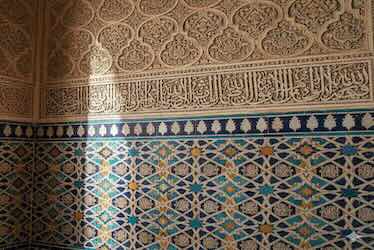
The Alhambra Palace
The Nasrid Palace in Granada contains numerous Khamsa motifs in its tile work and stucco decoration. The hand appears in geometric Islamic patterns, often integrated with arabesque designs and Quranic calligraphy. These representations are subtle—embedded within the overall design rather than standing alone.
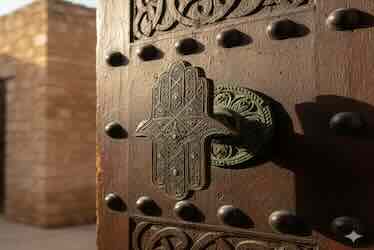
Moroccan Door Knockers
Perhaps the most iconic architectural use of the Khamsa is the hand-shaped door knocker found throughout Morocco's medinas. Cast in bronze or brass, these functional amulets serve a dual purpose: summoning inhabitants and warding off evil from entering the home. The tradition dates back centuries.
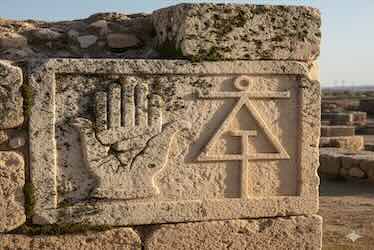
Tanit Temple Reliefs
Excavations at Carthaginian temples dedicated to Tanit reveal hand symbols carved into stone. These proto-Khamsas show an open palm with five fingers, often accompanied by the triangular "Sign of Tanit." These are among the earliest representations of the protective hand motif.
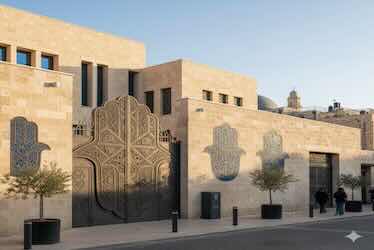
Contemporary Israeli Architecture
Modern Israeli buildings, particularly in Jerusalem's Old City, incorporate Hamsa motifs in decorative metalwork, gate designs, and facade ornaments. Artists blend ancient symbolism with contemporary minimalist aesthetics, creating a bridge between tradition and modernity.
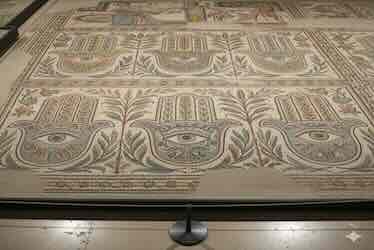
Bardo Museum Mosaics
Roman-era mosaics in Tunisia occasionally feature hand symbols, demonstrating continuity from Punic to Roman to Islamic traditions. These mosaics show hands with eyes in the center—a design element that would become standard in later Islamic and Jewish interpretations.
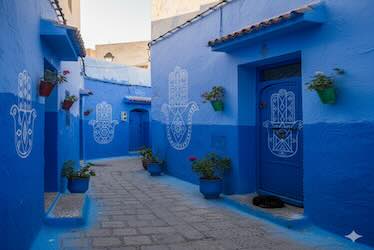
Blue-Painted Walls
The coastal town of Essaouira is famous for its blue-painted doors and walls adorned with hand symbols. The blue color (traditionally associated with warding off the evil eye) combined with the Khamsa creates a double layer of protection. This aesthetic has become synonymous with Moroccan design.
Jewelry: Wearing Protection
Khamsa jewelry represents the most personal relationship with the symbol. Worn close to the body—as necklaces, bracelets, rings, and earrings—these pieces serve as constant reminders of protection, faith, and cultural identity. Jewelry styles range from ornate traditional Berber silver to minimalist contemporary gold.
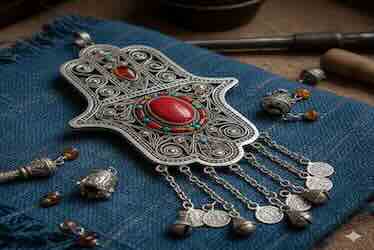
Berber Silver Khamsa
Traditional Berber silversmiths create large, ornate Khamsa pendants with intricate filigree work, coral or amber inlays, and dangling elements. These pieces are often family heirlooms, passed down through generations. The silver is hand-hammered and oxidized for an antique finish.
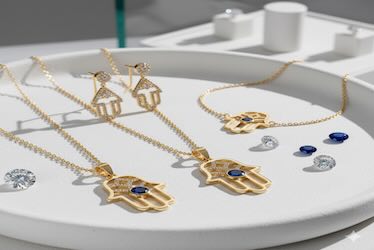
Israeli Gold Hamsa
Contemporary Israeli jewelry designers create sleek, minimalist Hamsa pieces in 14k or 18k gold. These designs emphasize clean lines and modern aesthetics while honoring the symbol's protective meaning. Often studded with diamonds or sapphires (representing the "eye"), they're popular in both religious and secular contexts.
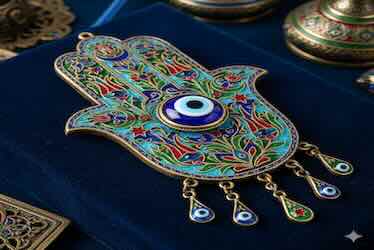
Ottoman-Style Khamsa
Turkish jewelers combine the Khamsa with the Nazar (blue evil eye bead), creating hybrid protective amulets. These pieces often feature intricate Ottoman motifs like tulips, crescents, and stars. Enamelwork in vibrant blues, reds, and greens is characteristic of the Turkish style.
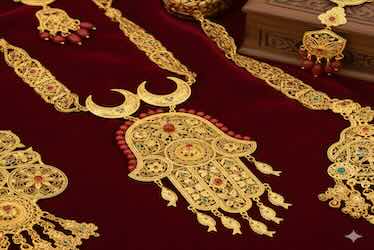
Tunisian Gold Khoumissa
In Tunisia, the Khamsa is called "Khoumissa." Traditional Tunisian gold jewelry features the hand combined with fish (another protective symbol), crescents, and coral beads. These pieces are elaborate and heavy, designed for special occasions like weddings.
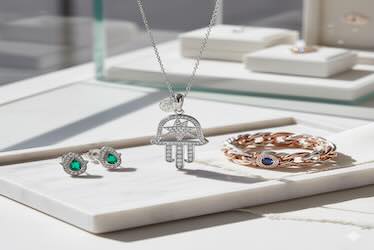
Western Fashion Jewelry
In the 2000s, Western designers adopted the Hamsa for fashion jewelry. Brands like Tiffany & Co., Cartier, and smaller boutique designers create high-end pieces targeting spiritual-but-not-religious consumers. These often feature precious stones and mixed metals, emphasizing style over traditional symbolism.
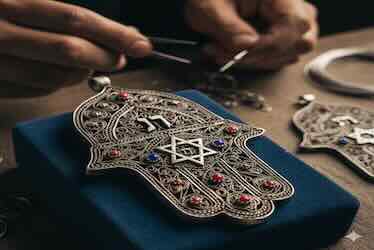
Yemenite Jewish Silver
Yemenite Jewish silversmiths created distinctive Hamsa pieces characterized by their delicate filigree work and architectural quality. These pieces often incorporate Hebrew letters, Stars of David, and granulation techniques. Yemenite Jewish jewelry is considered among the finest in the Jewish silverworking tradition.
Textiles: Embroidered Protection
The Khamsa appears woven into rugs, embroidered onto garments, and printed on fabrics across the Mediterranean. Textile Khamsas serve both decorative and protective functions—adorning homes while safeguarding against negative energy.
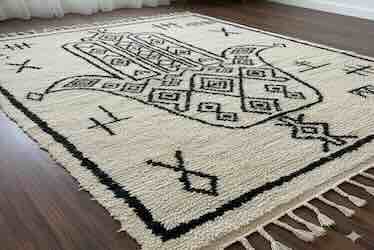
Berber Rugs
Moroccan Berber women weave Khamsa symbols into tribal rugs using ancient geometric patterns. These rugs, particularly from the Beni Ourain and Azilal tribes, feature abstract hand motifs in natural wool colors (cream, brown, black). Each rug is unique, reflecting the weaver's personal style and protective intentions.
.jpg)
Palestinian Embroidery (Tatreez)
Palestinian women embroider Khamsa motifs onto traditional thobes (dresses) using cross-stitch technique. The hand appears alongside cypresses, birds, and geometric patterns in vibrant reds, greens, and oranges. These garments are cultural treasures, with regional variations indicating the wearer's village of origin.
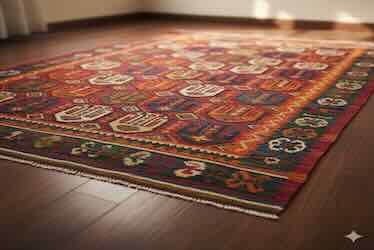
Turkish Kilim Rugs
Turkish kilim (flat-woven) rugs incorporate stylized hand symbols called "Elibelinde" (hands on hips), which are protective fertility symbols. While not identical to the Khamsa, they represent the same tradition of using hand imagery for protection. These rugs feature bold geometric designs in reds, blues, and golds.
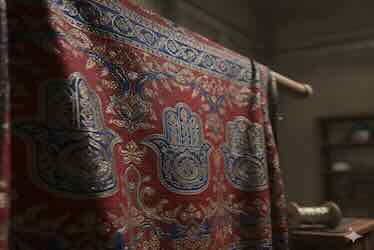
Damascus Brocade
Syrian artisans created luxurious brocade fabrics with metallic Khamsa patterns woven into silk. These textiles were used for ceremonial garments, cushions, and wall hangings. The Syrian civil war has tragically disrupted this centuries-old craft tradition.
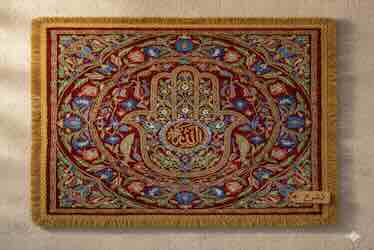
Tunisian Wall Hangings
Tunisian textile artists create decorative wall hangings featuring the Khamsa surrounded by Islamic calligraphy and floral motifs. These pieces, often made for newlyweds, combine embroidery, appliqué, and sequin work on velvet or cotton backgrounds.
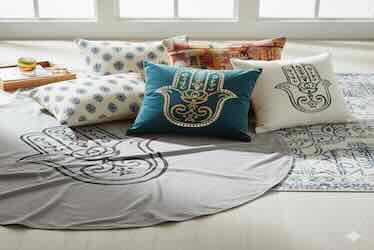
Modern Home Textiles
Today, the Khamsa appears screen-printed on everything from throw pillows to beach towels. Companies like Anthropologie, Urban Outfitters, and independent Etsy sellers mass-produce Hamsa textiles targeting Western bohemian aesthetics. While commercially successful, these often lack the cultural context of traditional pieces.
Ceramics & Metalwork: Functional Art
Khamsa motifs adorn functional objects—plates, bowls, lamps, mirrors, and decorative vessels. These objects bring protection into daily life, transforming mundane activities like dining or grooming into spiritually charged rituals.
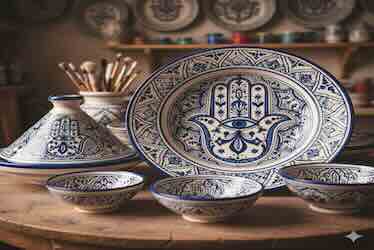
Fez Blue Pottery
Fez is renowned for its cobalt blue pottery featuring hand-painted Khamsa designs. Artisans use traditional techniques dating to the 9th century, creating plates, tajines, and decorative pieces with intricate geometric patterns surrounding the hand symbol. The distinctive Fez blue is created from natural cobalt oxide.

Hanukkah Menorahs
Israeli artists create Hanukkah menorahs (nine-branched candelabras) incorporating Hamsa designs. These Judaica pieces combine religious function with protective symbolism, often featuring the hand as the central shamash (helper candle) holder. Materials range from brass to glass to ceramic.
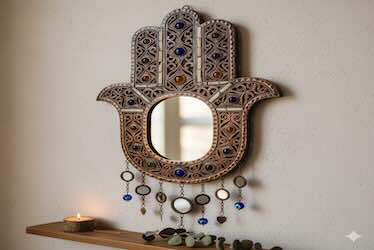
Hand-Shaped Mirrors
Moroccan metalworkers create mirrors framed in hand-shaped brass or copper. These serve a dual symbolic purpose: the mirror reflects the evil eye back to its sender, while the Khamsa hand provides an additional layer of protection. The metalwork is often inlaid with colored glass or bone.
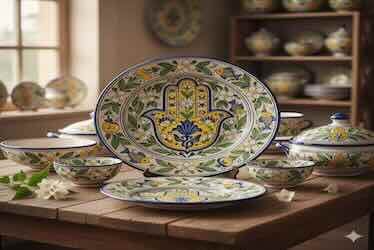
Nabeul Ceramics
The Tunisian town of Nabeul specializes in hand-painted ceramics with Khamsa motifs. Plates, bowls, and serving dishes feature the hand surrounded by jasmine flowers (Tunisia's national flower), fish, and Arabic calligraphy. The style is characterized by bright yellows, greens, and blues.
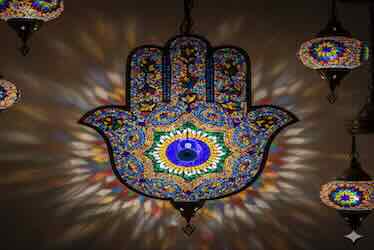
Turkish Mosaic Lamps
Turkish artisans create stunning mosaic lamps with Khamsa designs using colored glass fragments. When illuminated, these lamps cast intricate patterns of light and shadow. The tradition combines Byzantine mosaic techniques with Ottoman aesthetics.
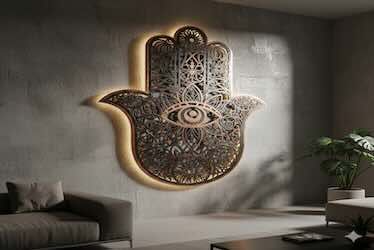
Metal Wall Art
Contemporary metal artists create large-scale Khamsa wall sculptures from copper, steel, or aluminum. These pieces, popular in modern interior design, range from minimalist outlines to elaborate 3D constructions with intricate cut-out patterns.
Fashion & Pop Culture: The Khamsa Goes Mainstream
In the 21st century, the Khamsa entered global fashion consciousness. From Madonna's Kabbalah-inspired accessories to luxury brand collections, the symbol transcended its cultural origins to become a universal style statement.
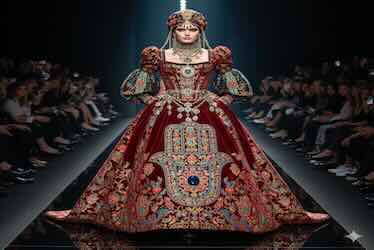
High Fashion Runways
Designers like Jean Paul Gaultier, Dolce & Gabbana, and Christian Lacroix have incorporated Khamsa motifs into haute couture collections. These pieces often blend the symbol with other "exotic" references, sometimes sparking debates about cultural appropriation versus appreciation.
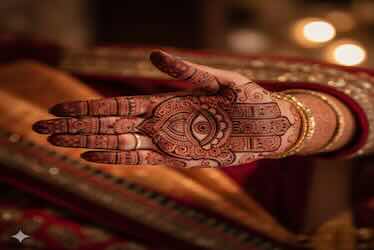
Henna & Body Art
The Khamsa is one of the most popular designs in henna (mehndi) body art. Brides in North Africa, the Middle East, and South Asia have the hand symbol applied to their palms or foreheads for weddings. The temporary nature of henna makes it perfect for incorporating intricate Khamsa patterns.
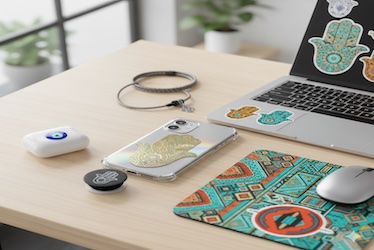
Tech Accessories
The Khamsa now appears on phone cases, laptop stickers, PopSockets, and AirPods cases. This digital-age adaptation shows the symbol's continued relevance for younger generations seeking protection—now from digital negativity and online evil eyes.
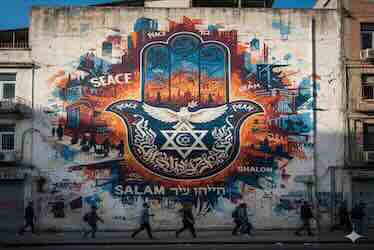
Street Art & Murals
Urban artists worldwide incorporate oversized Khamsa symbols into street art and murals. These works often carry political messages about Middle Eastern peace, refugee crises, or interfaith harmony. Notable examples appear in Berlin, Tel Aviv, Beirut, and New York.

Celebrity Jewelry
Celebrities like Madonna, Rihanna, and Britney Spears popularized Hamsa necklaces in the 2000s. Madonna's interest in Kabbalah brought Jewish mysticism (and its symbols) into mainstream pop culture. This sparked a commercial boom in Hamsa jewelry.

Yoga & Wellness
The Khamsa appears on yoga mats, meditation cushions, and wellness retreat logos. While disconnected from its original religious contexts, these uses reflect the symbol's universal appeal as a representation of mindfulness, protection, and spiritual seeking.
The Artistic Future of the Khamsa
What will the next chapter of Khamsa art look like? As technology advances, we're seeing:
- Digital NFT Art: Artists creating blockchain-based Khamsa artworks
- 3D-Printed Jewelry: Customizable Hamsa pieces designed and manufactured on-demand
- Projection Mapping: Khamsa symbols projected onto historic buildings for festivals
- Augmented Reality: AR apps that place virtual Khamsa protection in your home
- Sustainable Fashion: Eco-conscious brands using the symbol to represent protection of the planet
Yet despite technological innovation, traditional craftspeople continue their work—Moroccan silversmiths hammering amulets, Fez potters hand-painting tiles, Yemenite jewelers perfecting filigree. The future of Khamsa art lies in this balance: honoring ancient techniques while embracing new mediums.
The hand that protected ancient Carthaginians, medieval Sephardic Jews, Ottoman sultans, and North African villagers now protects Silicon Valley tech workers and Tokyo fashion enthusiasts. Its form evolves, but its essence remains: a beautiful reminder that we are all vulnerable, and we all seek protection.